
Aflatoxin B1 hepatic metabolism in four commercial poultry species
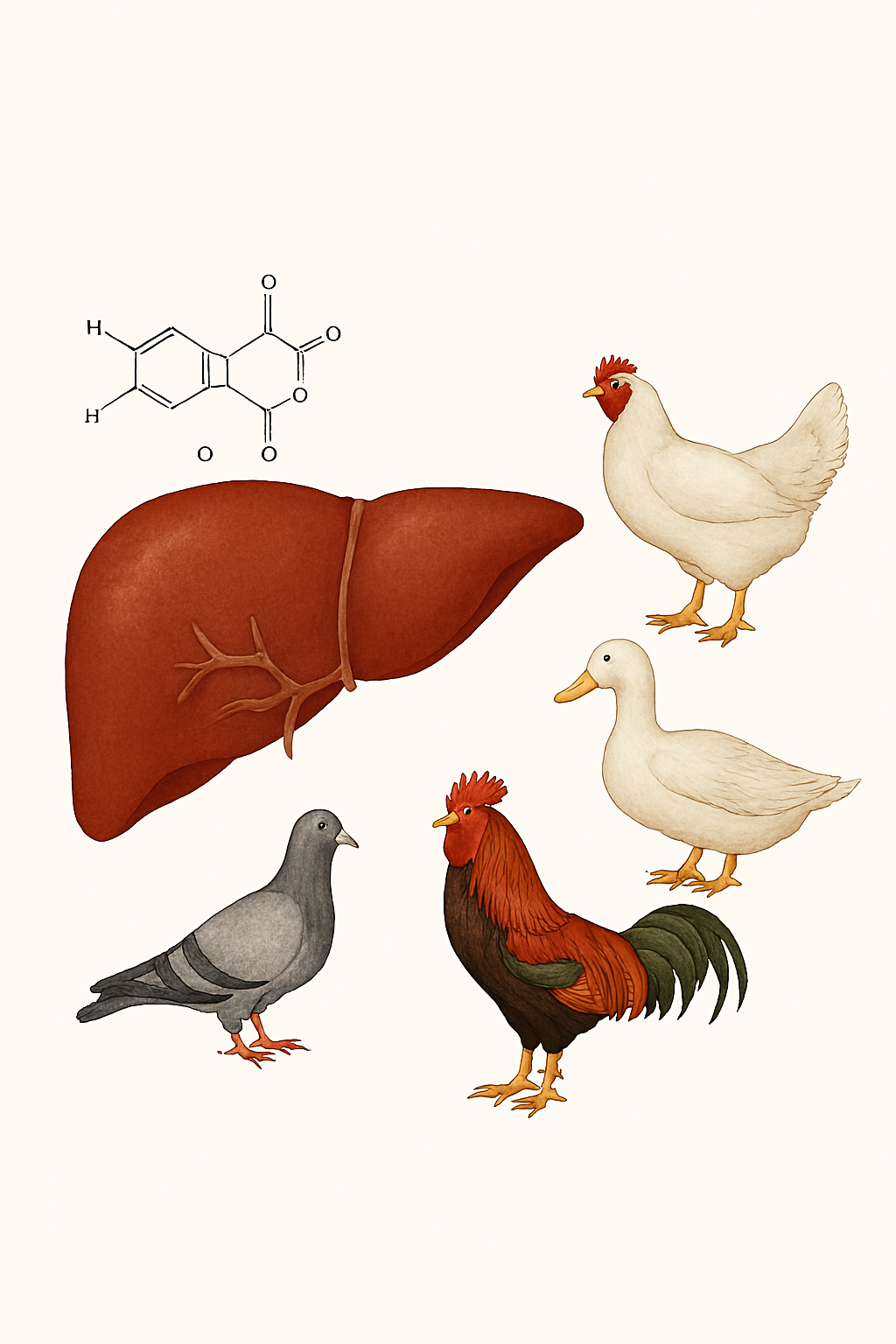
Introduction. The adverse effects of aflatoxin B1 (AFB1) are caused by the metabolism of this mycotoxin, where toxic products as aflatoxin B1 epoxide and aflatoxin B1 dialdehyde are produced. Objective. The present study aims to determine the enzyme kinetic parameters of each metabolic stem in the AFB1 metabolism pathway for the chicken, duck, quail and turkey and compare these parameters with in vivo AFB1 effects. Materials and methods. Microsomal and cytosolic fractions were obtained by differential centrifugation and assayed in vitro. Incubations were performed under the appropriate conditions to determine the enzymatic parameters Km, Vmax and CLint of the activities AFB1 epoxidase, aflatoxicol dehydrogenase, AFB1 reductase, glutathione-S-transferase and AFB1 aldehyde reductase. The detection of both the substrate and the biotransformation product was performed by high-performance liquid chromatography and the enzymatic parameters were determined by non-linear regression. Results. The duck presents the higher production of AFB1 epoxide, which is associated with its high sensitivity. The ratio of aflatoxicol dehydrogenase to AFB1 reductase activity is highest in ducks and lowest in chickens, indicating that AFB1 has a greater cytosolic bioavailability for epoxidation in ducks, while glutathione transferase activity is higher in chicken breeds. Finally, the production of mono- and dialcohol aflatoxin B1 is more efficient in chicken breeds and turkeys. Conclusions. Chicken resistance is due to greater efficiency of neutralization reactions and low rates of bioactivation and cytosolic bioavailability of AFB1, in contrast to ducks, a highly sensitive species, or to species with intermediate sensitivity, such as turkeys and quails.