
febrero 21, 2026

Comparison of different methods in the extraction of essential oil from rhizomes of Hedychium coccineum: chemical composition and biological activity
Hedychium coccineum

Hedychium coccineum

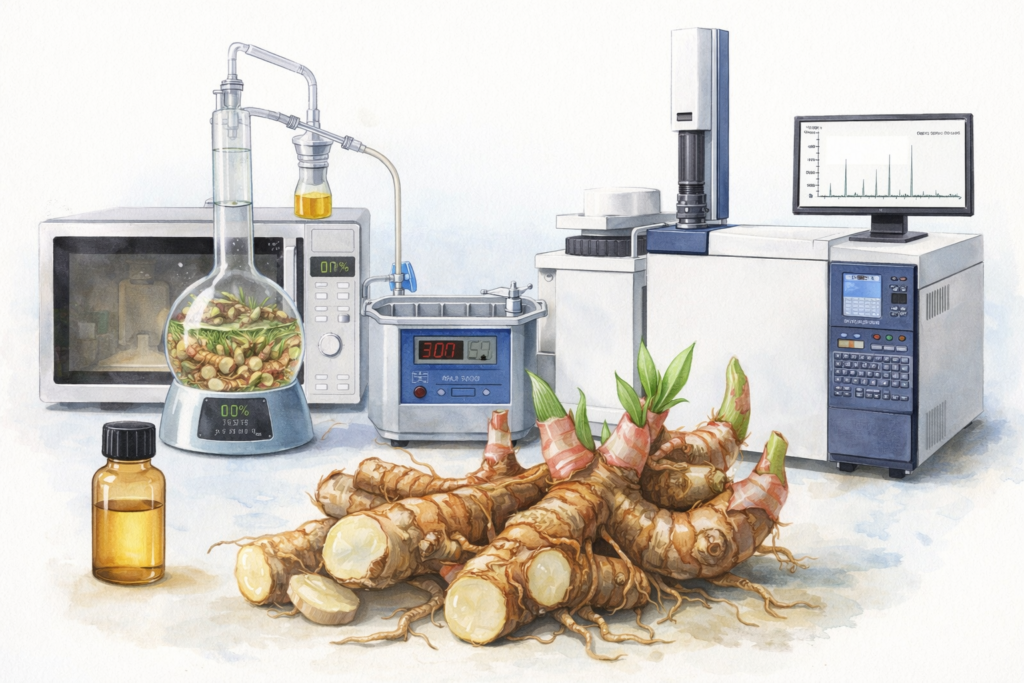
Introduction. Plants of the Zingiberaceae family are an important source of bioactive metabolites with therapeutic and biotechnological applications. Among them, Hedychium coccineum is characterized by rhizomes rich in essential oils (EO) with antimicrobial, antioxidant, and insect repellent properties. Aim. To optimize the extraction of AE from H. coccineum rhizomes using microwave-assisted hydrodistillation (MAHD), comparing it with ultrasonic pretreatment (US+MAHD) and conventional hydrodistillation (HD). Materials and methods. A Box-Behnken design was used to evaluate time, power, and solid-liquid ratio. The EO were characterized by gas chromatography-mass spectrometry and analyzed for their physicochemical properties, energy consumption, CO2 emissions, repellent activity against Sitophilus spp., and antioxidant capacity using the DPPH assay. Results. The optimization model showed high reliability (R² = 0.9962, p < 0.0001) and allowed the determination of optimal conditions for MAHD (50 min, 600 W, 1:11 g/mL), with a yield of 0.2219%. The US+MAHD method achieved the highest yield (0.3045%), signifi cantly exceeding HD (0.1846%), in addition to reducing energy consumption (≤0.535 kWh) and CO2 emissions (≤0.428 kg) compared to the conventional technique (2.2 kWh; 1.76 kg). Thirty-two main compounds were identified, including linalool, (E)-nerolidol, bornyl acetate, and artemisia ketone. The EO showed a strong dose- and time-dependent repellent eff ect, with percentages close to 100% at concentrations ≥0.503 μL/cm² during the fi rst 12 hours, as well as moderate antioxidant activity with an IC50 of 24.79 mg/ mL. Conclusion. Evidence shows that emerging technologies improve effi ciency, reduce environmental impact, and preserve the chemical composition of the oil, positioning H. coccineum as a promising source of compounds with applications in biocontrol and therapeutic formulations.

Keywords: Zingiberaceae, Hedychium, ultrasound, microwave, Sitophilus.

https://doi.org/10.47499/revistaaccb.v1i37.328

About The Author