

diciembre 30, 2025

Diameter growth patterns in 12 tree species from the tropical dry forest of Tolima
Diameter growth patterns in 12 tree species from the tropical dry forest of Tolima

Diameter growth patterns in 12 tree species from the tropical dry forest of Tolima

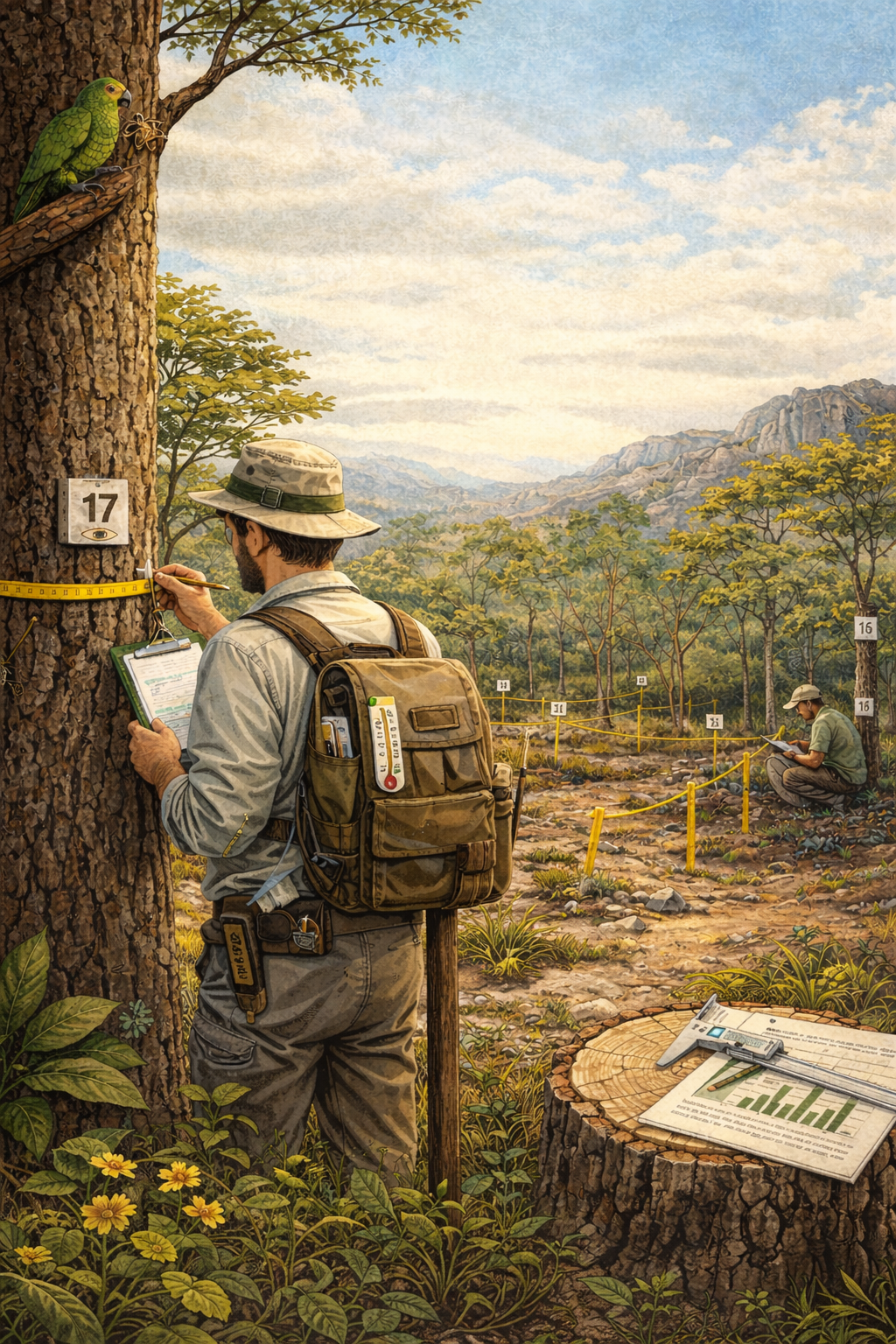
Introduction. The tropical dry forest (TDF) of Colombia harbors remarkable biological diversity and performs essential ecological functions; however, it is severely degraded, and significant gaps persist in the understanding of diameter growth rates of its native tree species. Objective. This study evaluated the diameter growth of twelve TDF species in the department of Tolima. Materials and methods. Through continuous monitoring of 107 trees with diameter at breast height (DBH) ≥ 10 cm over eight years (2008–2016) in four permanent plots. The current annual increment (CAI) was calculated for each individual and each species. One-way analysis of variance (ANOVA) and Tukey’s test were applied to detect significant differences among species. Subsequently, species were functionally classified into three growth categories using the percentile method. Results. The results revealed statistically significant differences (p < 0.001), with CAI values ranging from 0.15 to 1.98 cm yr-1. Ceiba pentandra exhibited the highest growth rate, while Cedrela odorata showed the lowest. Species classified in the slow-growth category were: C. odorata, Machaerium capote, Aspidosperma polyneuron, and Astronium graveolens; in the medium-growth category: Guarea guidonia, Ladenbergia oblongifolia, Nectandra reticulata., and Pseudobombax septenatum; and in the fast-growth category: Bulnesia carrapo, Jacaranda copaia, Anacardium excelsum, and C. pentandra. Conclusions. This classification provides a valuable tool for adjusting harvesting cycles, selecting species for ecological restoration programs, and designing forest management strategies adapted to the growth dynamics of each species.

Keywords: Ecological succession; forest growth; forest landscape restoration; forest monitoring and assessment; size distribution; species diversity; sustainable forestry (AGROVOC).

https://doi.org/10.47499/revistaaccb.v1i37.329

About The Author