
febrero 6, 2026

SNPs polymorphisms associated with gastric mucosal receptors and their effect on the interaction with Helicobacter pylori adhesins in Colombian subjects
SNPs polymorphisms

SNPs polymorphisms

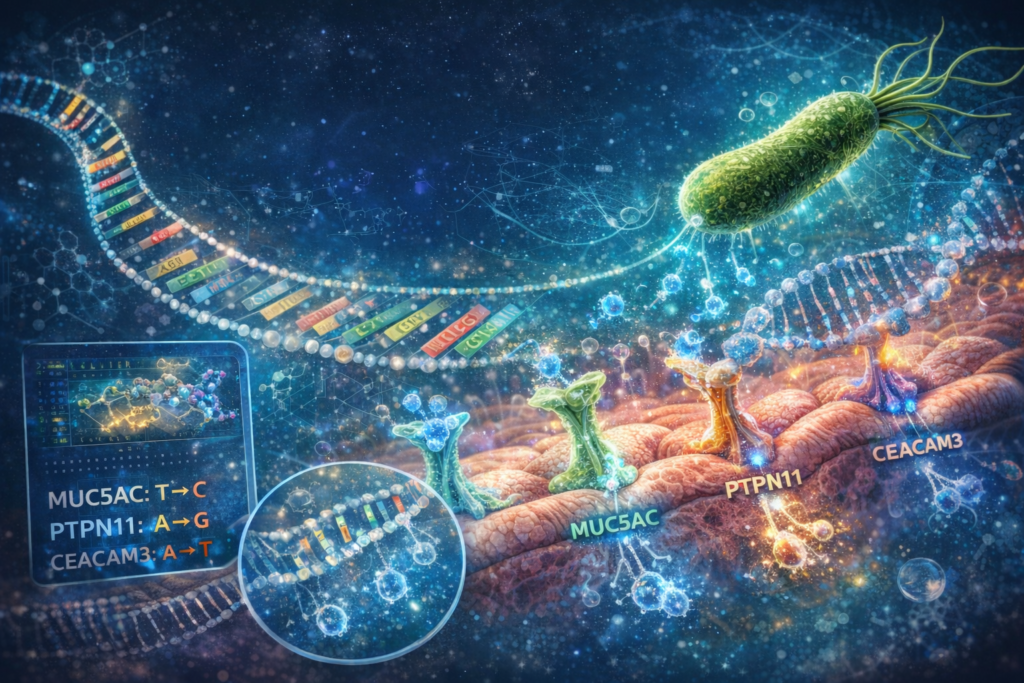
Objective: By characterizing single nucleotide polymorphisms (SNPs) present in gastric mucosal receptor genes and evaluating their interaction with Helicobacter pylori (H. pylori) adhesins, it is possible to identify a valid strategy for blocking its colonization and preventing gastric cancer (GC) in Colombia. Materials and Methods: SNPs associated with three gastric mucosal receptors were characterized: MUC5AC, PTPN11, and CEACAM3. Sixty-three exomes from individuals without gastric lesions and 14 exomes from patients in Nariño at risk of GC and infected with H. pylori were included. The causal effect of the variants was analyzed using the annotation programs PolyPhen-2, SIFT, MutationTaster, CADD, and I-Mutant. Two hundred and thirty-five H. pylori sequences were included for analysis of the babA, cagA, and hopQ genes, and a molecular docking analysis was performed using HDOCK. Results: 6/26 deleterious SNPs were identified in individuals without gastric lesions. In individuals with gastric pathologies and infected with H. pylori, 2/5 deleterious SNPs were identified: 24/87 amino acid changes in BabA; 42/87 in CagA; and 21/87 in HopQ. Conclusions: Variants in the amino acid sequence of the virulence factors BabA, CagA, and HopQ favor interaction with gastric mucosal receptor proteins MUC5AC, PTPN11, and CEACAM3, respectively. The identified SNPs induce affinity changes at the structural and functional levels favoring H. pylori colonization; therefore, they can be considered as potential molecular markers for intervention in the prevention of gastric cancer in Colombia.

Keywords: H. pylori, Colonization, Receptor proteins, Virulence genes, Gastric cancer, SNPs.

https://doi.org/10.47499/revistaaccb.v1i37.334

About The Author